The LiT List
Glamping & Camping Ideas + Resources
How to Set Up a Hunting Base Camp: 14 Tips for a Better Hunt
A good hunting base camp should do more than give you somewhere to sleep.
For a multi-day hunt, camp becomes the place where you dry wet gear, warm up, organize equipment, eat, sleep, plan the next day, and hopefully celebrate a successful hunt.
A little planning before you pitch your tent can make the difference between a comfortable basecamp and several days of stepping over muddy boots, searching for missing gear, and wondering why you decided to put the wood stove directly in everyone's path.
Here's how to set up a hunting base camp that's comfortable, organized, and ready for several days in the field.
1. Choose the Right Location for Hunting Camp
Before unloading the truck, take some time to choose your campsite carefully.
Look for reasonably flat, well-drained ground rather than the lowest spot available. A small depression that looks harmless on a dry afternoon can become a puddle after a night of rain.
Ideally, your hunting base camp should also be:
- Accessible enough to bring in your tent, stove, food, and other heavy gear
- Protected from the strongest prevailing winds
- Away from obvious drainage channels and low areas
- Clear of dead trees, loose branches, and other overhead hazards
- Far enough from hunting activity that camp doesn't interfere with the area you're actually hunting
If you're setting up on public land, always check the rules for camping in that particular forest, management area, or hunting unit.
Look Up Before You Set Up
Once you find a level spot, look overhead.
Dead trees and large dead branches — sometimes called widowmakers— are a good reason to move your tent somewhere else. Wind, rain, or snow can bring them down without much warning.
A beautiful spot beneath an old tree isn't worth the risk.
2. Think of Base Camp as a Small Campsite, Not Just a Tent
One of the biggest mistakes is trying to cram every part of camp into one little area.
Instead, think in zones.
A well-planned hunting camp might have separate areas for:
- Sleeping
- Gear storage
- Cooking and eating
- Wood and stove supplies
- Vehicles or ATVs
- Cleaning muddy equipment
- Meat storage after a successful hunt
Keeping these areas somewhat separated makes camp safer and considerably easier to live in.
It also keeps your sleeping area from becoming a combination kitchen, mudroom, equipment locker, and garage.
For more ideas on organizing camp once your tent is up, see our Hunting Camp Tips article.
3. Start With the Hunting Tent

Your tent is the center of your base camp, so set it up before bringing everything else into camp.
For a backpack hunt, a lightweight shelter is usually the obvious choice. But if your camp is accessible by truck, ATV, pack animal, or another way to haul equipment, a larger canvas hunting tent can create a much more comfortable home base.
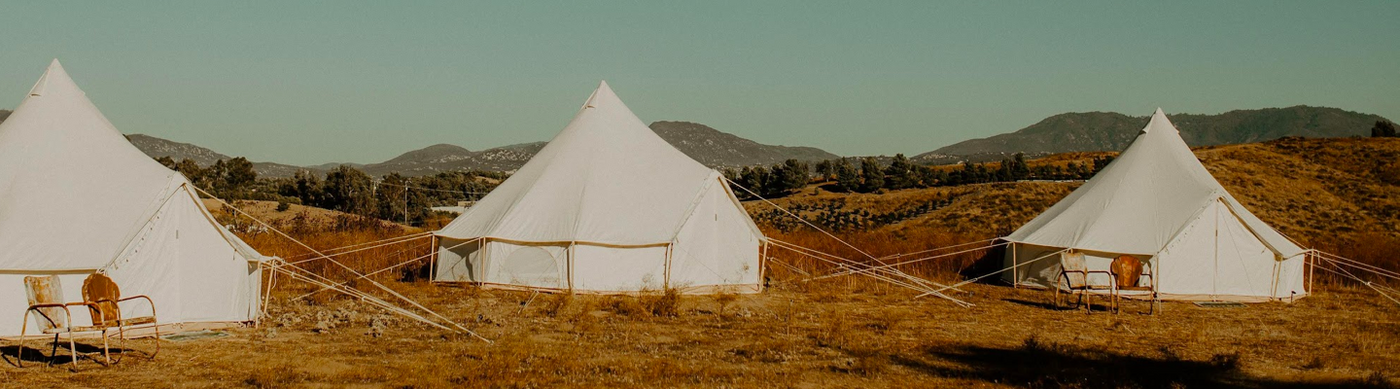
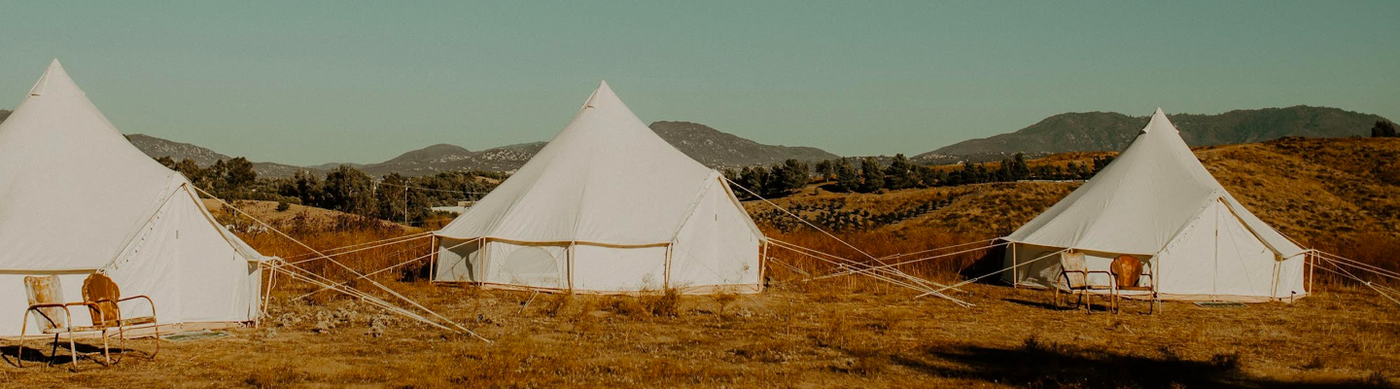
Canvas bell tents and traditional wall tents are particularly useful for longer hunting trips because they give you room to stand up, sleep on cots, organize gear, and add a wood stove when conditions get cold.
If you're trying to decide which type and size of tent works best for your hunt, our guide to the best hunting tents for elk camp breaks down the differences between backpacking tents, canvas bell tents, and traditional outfitter-style wall tents.
Give Your Tent Enough Space
Don't choose a tent site that barely fits the footprint.
Remember that guy lines extend well beyond the tent itself. You'll also want clear walking paths around camp, especially when returning in the dark.
A reflective guy line is particularly useful around hunting camp, where people may be walking around before sunrise and after sunset.
4. Position Your Tent for Weather
Your hunting tent is much more comfortable when you work with the conditions instead of fighting them.
When possible, position the entrance so that strong prevailing winds aren't blowing directly through the doorway every time you open it.
Also consider morning sunlight.
During a cold fall hunt, positioning camp where the morning sun can reach the tent can help warm and dry your shelter after a cold night.
At the same time, avoid locations where rainwater is likely to run underneath or toward the tent.
No tent setup can compensate for pitching directly in a drainage channel.
5. Create a Mud Zone at the Entrance
This might be one of the simplest ways to keep a hunting base camp livable.
Create a designated area immediately outside — or just inside — the tent entrance for:
- Muddy boots
- Wet rain gear
- Packs
- Gaiters
- Trekking poles
- Other dirty equipment
A small outdoor mat, tarp, boot tray, or piece of ground covering can help prevent everyone from tracking half the mountain into the sleeping area.
If your tent has a waterproof floor, keeping mud concentrated near the entrance also makes cleanup much easier.
6. Set Up Cots Before Bringing in Gear

If you're vehicle camping, cots are worth the space they take up.
They keep you off the cold ground and create valuable storage underneath.
Place the cots around the outside of your tent while keeping the middle reasonably open. Hunters can then store duffels, clothing, boots, and personal equipment under their individual cots rather than piling everything together.
For a larger canvas hunting tent, this can create a surprisingly comfortable sleeping arrangement while leaving enough common space for everyone to move around.
Give Everyone a Gear Zone
This is especially helpful with three or four hunters sharing a tent.
Give each person a specific cot and storage area.
Otherwise, by day three, nobody knows whose gloves are whose, one guy has somehow acquired six headlamps, and someone is accusing everyone else of stealing his socks.
Organization deteriorates quickly in hunting camp.
Fight back early.
7. Plan Your Wood Stove Area Carefully
For cold-weather hunting, a canvas tent with a stove jack can completely change the experience.
A wood-burning tent stove gives you somewhere to warm up after a cold day and can help dry damp clothing and equipment before the next morning.
But the stove needs its own dedicated area.
Keep adequate clearance between the stove and:
- Tent walls
- Cots and sleeping bags
- Clothing
- Packs
- Firewood
- Other combustible equipment
Use an appropriate fire-resistant stove mat beneath the stove and follow the stove and tent manufacturer's requirements for installation and clearance.
Don't place the stove directly in the primary walkway just because that's where it happens to fit.
When choosing your tent size, remember that a stove takes up significantly more usable space than its physical dimensions suggest.
8. Create a Place to Dry Hunting Gear
Wet gear is nearly inevitable on a multi-day fall hunt.
Instead of throwing jackets and pants over the nearest cot, create a dedicated drying area.
Depending on your tent, you may be able to use gear hangers, a freestanding rack, or another system that keeps clothing organized and allows air to circulate.
If you're using a wood stove, position the drying area where clothing can benefit from the warmth without getting dangerously close to the stove or stovepipe.
Canvas can also be advantageous in hunting camp because the material itself is breathable, helping manage the moisture generated by several people and their damp gear inside the shelter.
9. Keep Some Ventilation in the Tent
When it's cold outside, closing every window and vent seems logical.
Don't overdo it.
Hunters bring significant moisture into a tent through breathing, wet clothing, snow, boots, and gear. Cooking or heating the shelter can add to the problem.
Use your tent's vents and windows to maintain some airflow, even in cold weather.
A breathable canvas tent with screened windows and ceiling vents gives you more control over ventilation without leaving the tent wide open to insects or weather.
10. Keep the Cooking Area Organized

Depending on your camp and local regulations, cooking may take place inside an appropriate shelter, beneath an awning, or completely outside.
Either way, create a designated camp kitchen instead of scattering food and cooking gear around the sleeping area.
A simple setup can include:
- Folding table
- Stove or cooking equipment
- Water container
- Cookware
- Food storage
- Trash container
- Cooler
Keep your food and wildlife-safety practices appropriate for the area where you're hunting. In bear country especially, follow local food-storage requirements rather than treating the hunting tent as a pantry.
11. Don't Process or Store Game Right Next to Camp
After a successful hunt, resist the temptation to turn the area beside your tent into the processing station.
Choose a separate location for handling and storing game.
You don't want blood, scraps, strong odors, or stored meat directly beside the place you're sleeping and cooking.
How you store harvested game will depend on the temperature, location, species, and applicable wildlife regulations, but separating this part of the hunt from your living area is a good general rule.
12. Establish a Place for Firewood

If you're running a tent stove, organize your firewood before temperatures drop.
Create a woodpile close enough to the tent that you're not wandering around camp at 4:30 in the morning looking for fuel, but don't stack wood against the tent or stove.
Keep some wood protected from rain or snow so you have dry fuel when you need it most.
And bring more than you think you'll need.
Cold hunting camps have a remarkable appetite for firewood.
13. Prepare for Darkness
Much of hunting camp happens in the dark.
You'll often leave before sunrise and return after sunset, so lighting deserves more consideration than it gets on an ordinary camping trip.
Set up lights around:
- The tent entrance
- Guy lines
- Cooking area
- Woodpile
- Primary paths through camp
Keep a headlamp in the same place every night.
Reflective tent guy lines and markers can also prevent an impressive number of nighttime face-plants.
14. Give Yourself More Space Than You Think You Need
Tent capacity ratings can be misleading for hunting camp.
Four people may technically be able to sleep in a particular tent, but four hunters also bring cots, boots, packs, bows or rifles, clothing, food, and piles of equipment.
Add a wood stove and the available floor space gets smaller again.
For a hunting base camp, we'd generally choose a larger tent than we would for ordinary weekend camping.
The goal isn't to maximize the number of sleeping bags you can fit on the floor.
It's to create a basecamp you can comfortably live in for several days.
Bell Tent or Wall Tent for Hunting Base Camp?
Both are proven options.
A traditional canvas wall tent provides vertical sidewalls and an efficient rectangular interior. They're particularly useful for larger established camps where you'll be setting up for longer periods.
A canvas bell tent provides a similarly spacious shelter with a much simpler support structure. Instead of hauling and assembling a large frame, most bell tents use a center pole, door pole, stakes, and guy lines.
That makes bell tents particularly attractive for hunters who establish a different basecamp each year or simply want less equipment to transport.
At Life inTents, we offer both styles because different hunting camps call for different shelters.
A Good Base Camp Makes a Better Hunt
Your hunting tent doesn't need to resemble a luxury cabin.
It just needs to work.
Choose a dry campsite, establish separate areas for sleeping and gear, keep wet equipment organized, plan carefully around your wood stove, and give your hunting party enough room to actually live inside the shelter.
After hiking all day, those small comforts become pretty significant.
And when the weather turns ugly, having a warm, dry, organized camp waiting for you can feel downright luxurious.
If you're planning a vehicle-accessible deer or elk camp, explore our canvas hunting tents to compare bell tents, traditional wall tents, stove-compatible options, and sizes for your next hunting base camp.

Related Resources
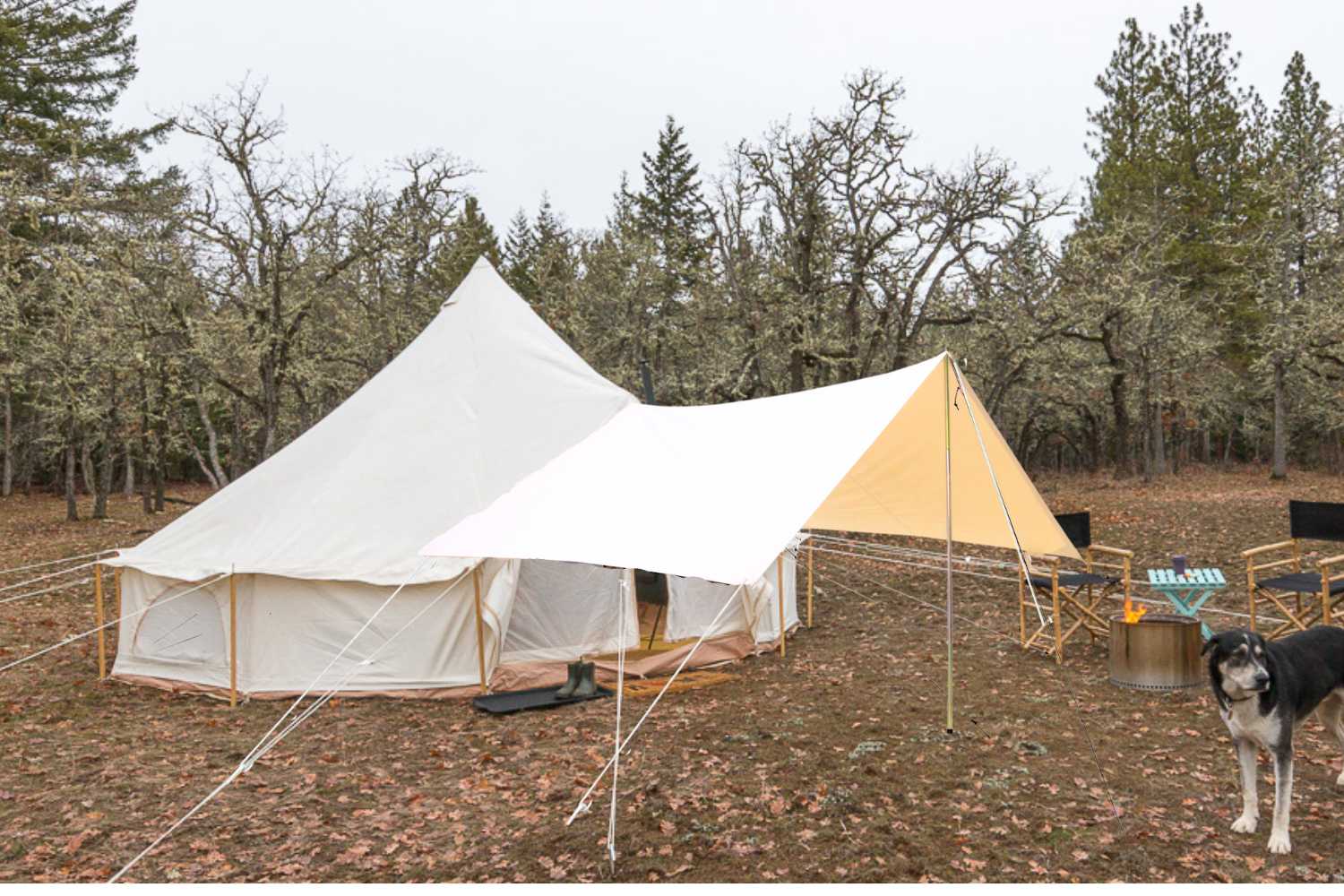
Best Hunting Tents for Elk Camp: What to Look For
Best Hunting Tents for Elk Camp: What to Look For Elk hunting can take you into some spectacular cou
How to Air Condition a Canvas Bell Tent (Portable AC Installation Guide)
There’s nothing quite like relaxing in a canvas bell tent after a day of hiking, paddling, or simplyLearn how to install a portable air conditioner in a canvas bell tent without permanent modifications. Includes tips for stove jack holes, utility ports, and cooling performance.